Paul
The persecutor turned apostle who carried the gospel to the Gentiles and wrote much of the New Testament.
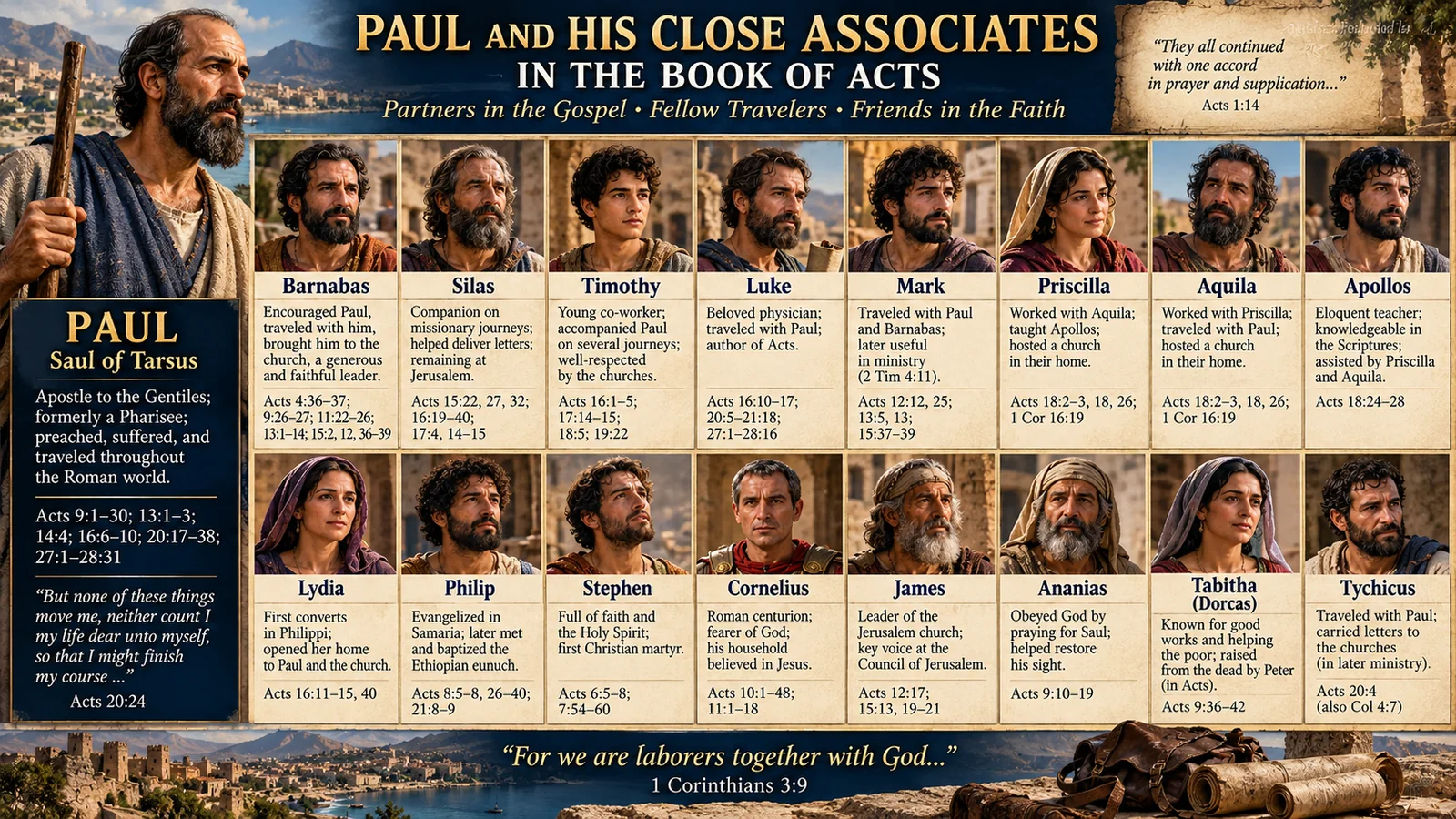
What the sources say, and how sure we are
- The text says
Paul, also called Saul, was a Pharisee from Tarsus who persecuted the church. After encountering the risen Jesus near Damascus he became an apostle to the Gentiles.Acts 9:1–19; Gal 1:13–17; Phil 3:4–6
- Outside evidence
Paul’s own letters are the earliest Christian writing we have, and seven of them are accepted as his by nearly all scholars. The Gallio inscription fixes his time in Corinth to about AD 50–52. An early Roman letter, 1 Clement, says he reached “the limit of the west” and suffered for his faith.Gallio Inscription; 1 Clement 5
- Debated
Acts and Paul’s letters describe his visits to Jerusalem differently, and scholars debate how to reconcile them. His death is not told in Acts. Tradition places it under Nero in Rome, about AD 64–67.Gal 1–2; Acts 15; Acts 28:30–31
- Christian conclusion
Christians read Paul as the apostle who explained that Jews and Gentiles are justified by faith in Christ.Rom 1:16–17; Gal 3:28