Pharisees
A Jewish movement of Jesus’s day known for devotion to the law and its interpretation.
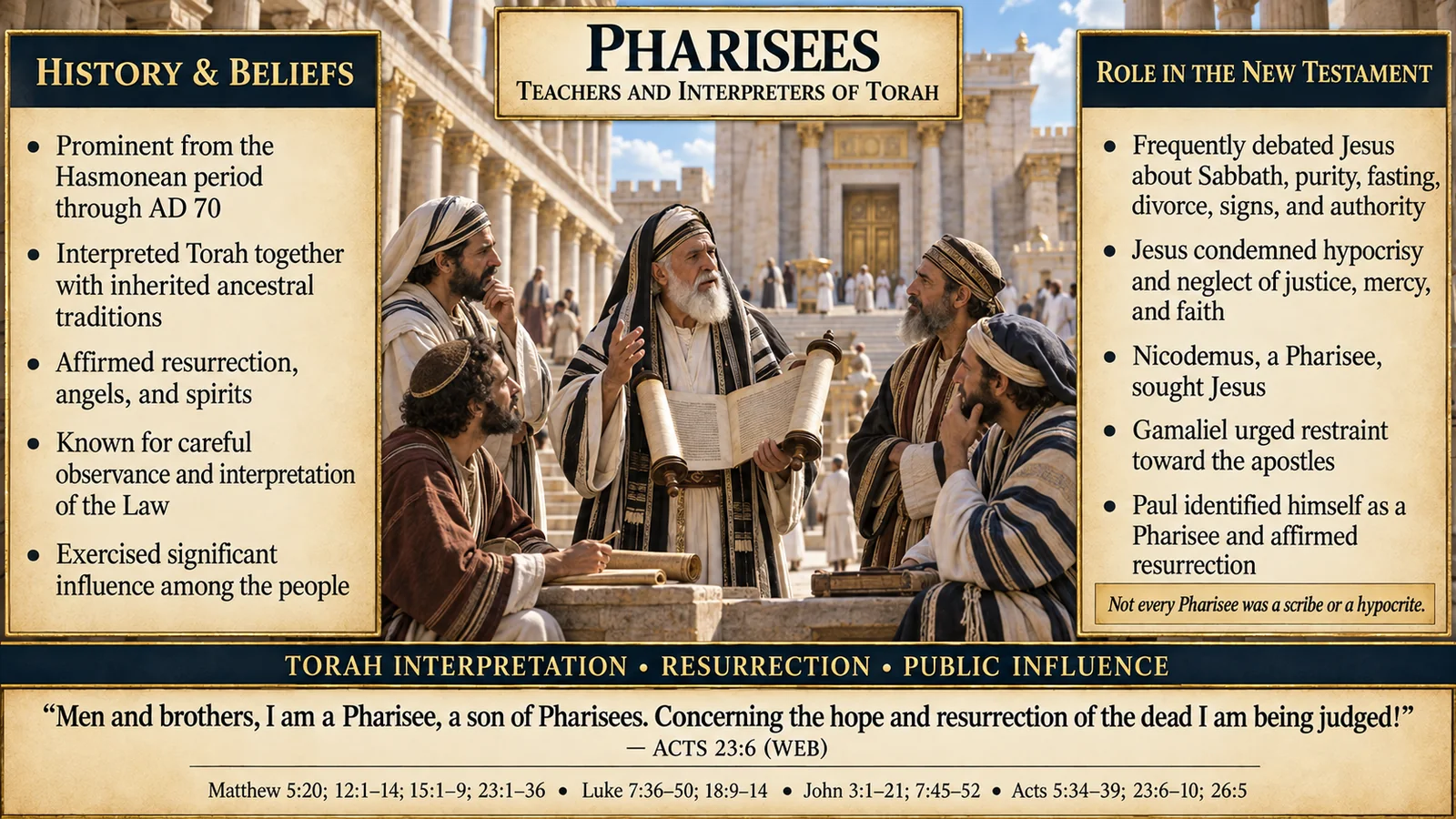
What the sources say, and how sure we are
- The text says
The Gospels show Pharisees debating Jesus about the Sabbath, purity, and tradition. Some Pharisees also show interest or support. Paul says he was a Pharisee.Mark 2:23–3:6; Mark 7:1–13; John 3:1–2; Acts 5:34–39; Phil 3:5
- Outside evidence
Josephus, a Jewish historian who says he followed the Pharisees, describes them as influential with ordinary people, as teaching resurrection and the importance of traditions beyond the written law.Josephus, Antiquities 13.297–298; 18.12–15; Life 12
- Debated
Many scholars see the Pharisees as ancestors of rabbinic Judaism after AD 70, though the connection was complex. Their origins before the 2nd century BC are unclear, and scholars debate how far Jesus’s sharp words in Matthew 23 apply to the group as a whole.Matt 23
- Christian conclusion
Christians generally read Jesus’s rebukes as calls to sincere obedience, not a verdict on all Jewish people. These passages have been misused to justify hostility toward Jews, which Christians widely reject.Matt 23:23; Mark 7:6–8
Why they matter
Pharisees are one of the groups that preserved and interpreted the Scriptures in the centuries between the Old and New Testaments, which is why knowing who they were makes the Gospels easier to read.