Exile & Return (including the Second Temple period)
Jerusalem’s fall, life under foreign empires, the return, rebuilding the temple, and the Second Temple period that leads into Jesus’s day.
What the sources say, and how sure we are
- The text says
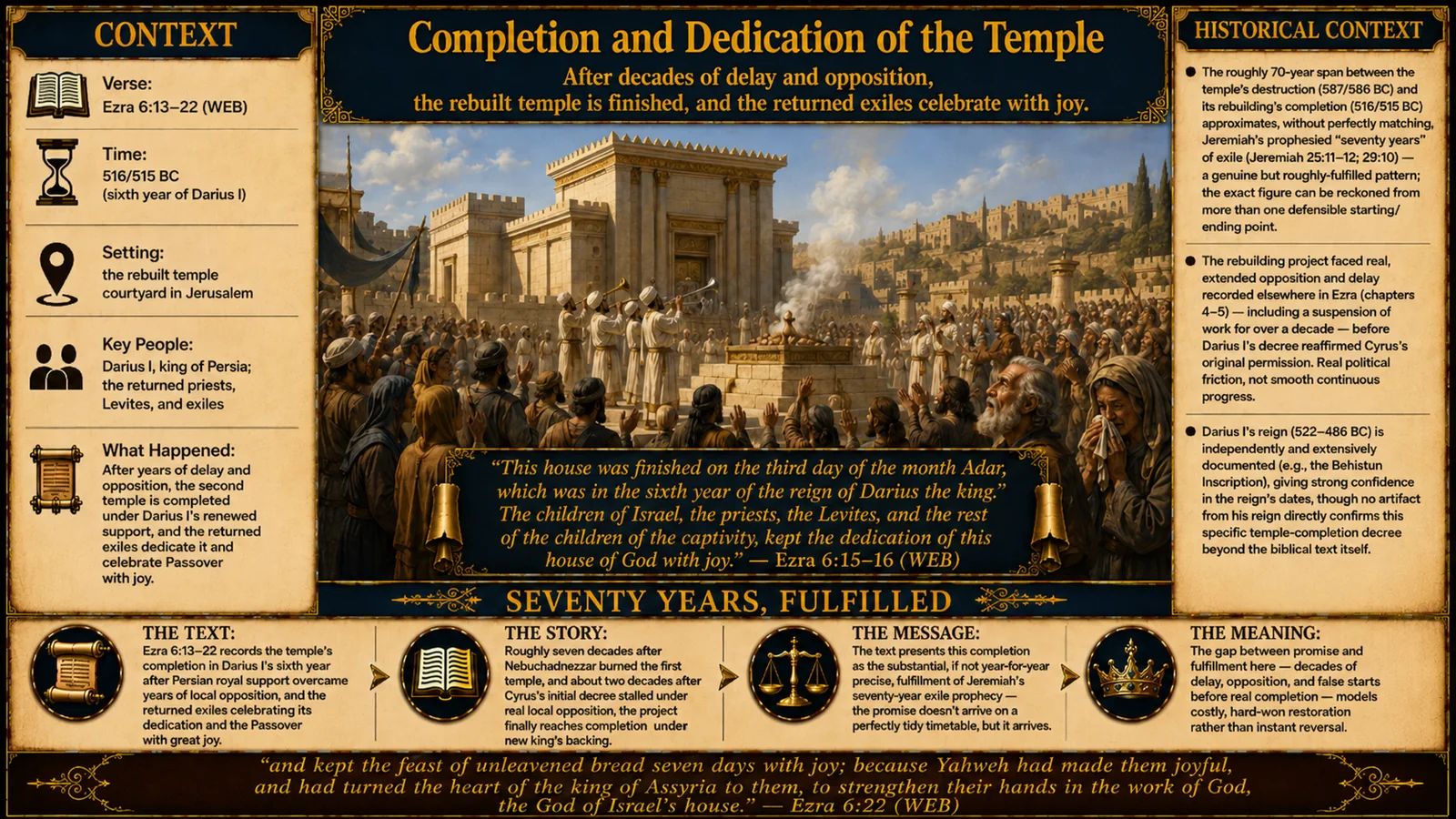
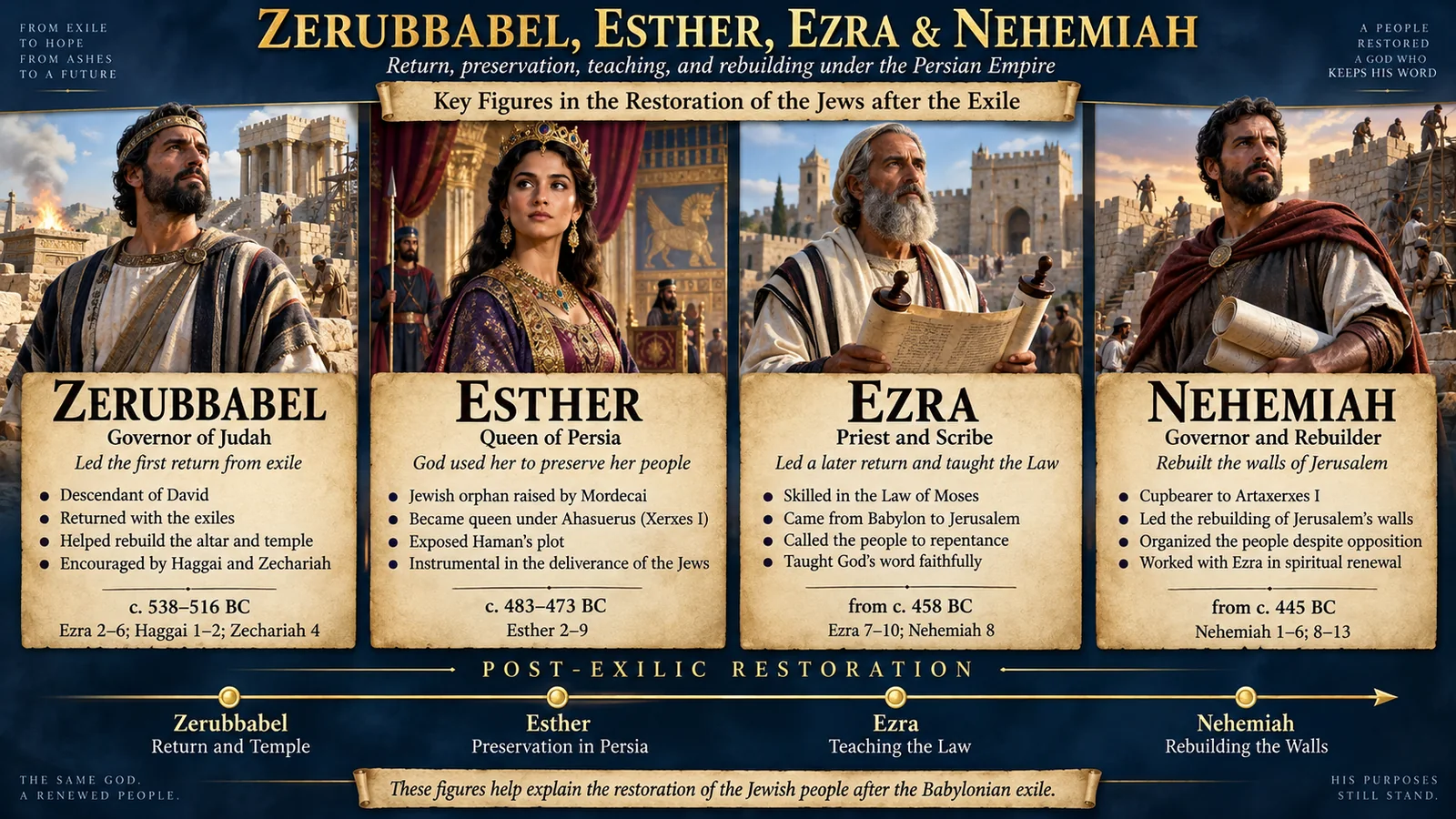
Babylon destroys Jerusalem and its temple in 586 BC, and many are taken into exile. Cyrus of Persia lets exiles return in 538 BC. The temple is rebuilt and finished about 516 BC, and Ezra and Nehemiah later lead further reforms.2 Kgs 25; Ezra 1:1–4; Ezra 6:15; Neh 2:1; Neh 6:15
- Outside evidence
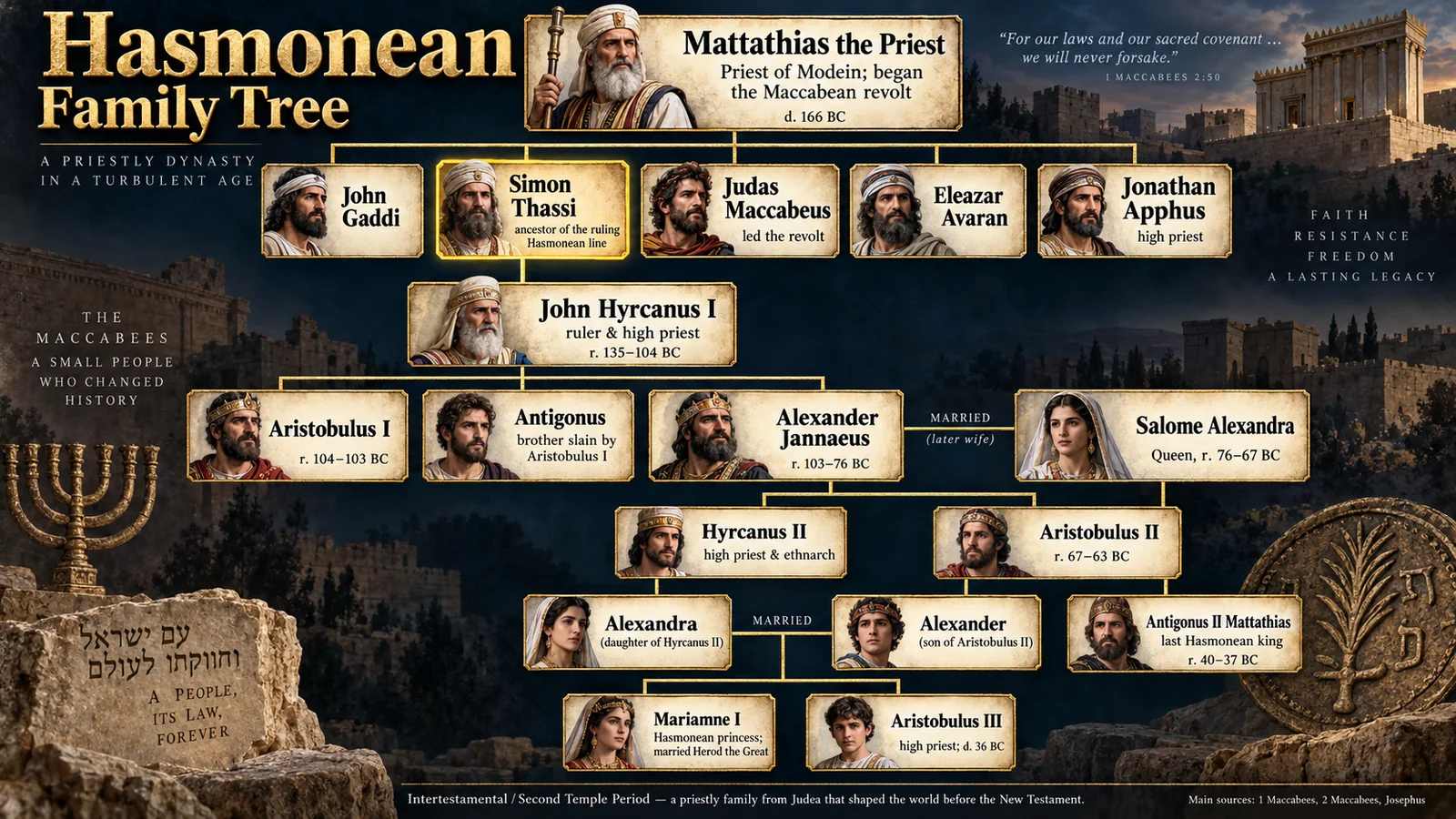
The period between the Testaments is documented outside the Protestant Bible. The books of 1 and 2 Maccabees (included in Catholic and Orthodox Bibles), Josephus, and the Dead Sea Scrolls describe Persian, Greek, Hasmonean, and Roman rule. These include Alexander’s conquest (332 BC), the persecution under Antiochus IV and the Maccabean revolt (from 167 BC), the Hasmonean kingdom, Rome’s capture of Jerusalem under Pompey (63 BC), and Herod the Great (37–4 BC), who enlarged the temple.1 Maccabees; Josephus, Antiquities 12–17; Dead Sea Scrolls
- Outside evidence
The Cyrus Cylinder shows Persia’s policy of returning displaced peoples. Letters from Elephantine in Egypt, from 407 BC, mention the governor of Judah and Sanballat of Samaria.Cyrus Cylinder; Elephantine Papyri
- Debated
The years between Malachi and Jesus are sometimes called “silent” because no prophetic book was written, but they were rich in writing and change: Greek-speaking Judaism, new sects such as Pharisees, Sadducees, and the Qumran community, and growing hopes for a messiah. Scholars also differ on the date of Daniel and on the order of Ezra’s and Nehemiah’s missions.Dan; Ezra 7:7
- Christian conclusion
Christians read this period as preparing for “the fullness of time” in which God sent his Son.Gal 4:4