Conquest & Judges
Israel enters Canaan, settles the land, and cycles through disorder, rescue, and the need for a faithful leader.
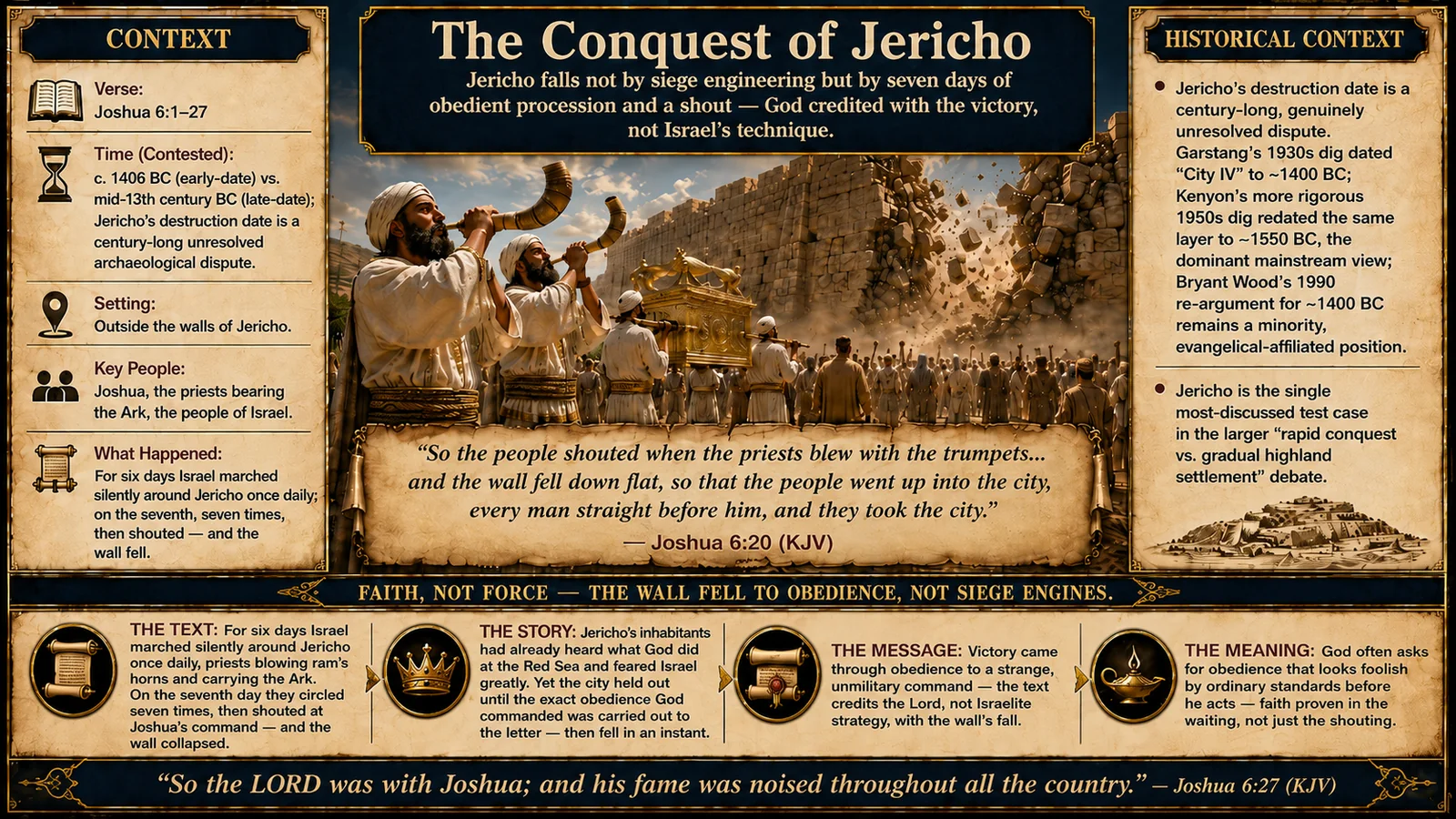
What the sources say, and how sure we are
- The text says
Joshua leads Israel across the Jordan and describes the capture of Jericho, Ai, and Hazor and the division of the land among the tribes. Judges describes a repeating cycle of rebellion, oppression, and rescue, and ends with “no king in Israel.”Josh 1–12; Josh 13–21; Judg 2:11–19; Judg 21:25
- Outside evidence
The Merneptah Stele (about 1208 BC) names Israel as a people in Canaan. The Amarna letters, from Canaanite city rulers to Egypt in the 14th century BC, describe disorder and pressure from groups called Habiru, though scholars disagree on whether these were the Hebrews.Merneptah Stele; Amarna Letters
- Debated
Scholars hold three main models of how Israel came to hold the land: a military conquest, a gradual settlement, and an internal social revolt. Excavations at Jericho and Hazor are used on all sides, and the early and late dates for the Exodus lead to different pictures of the conquest.Josh 6; Josh 11
- Christian conclusion
Christians read the judges as rescuers who point to the need for a king, and, ultimately, for Christ.Judg 21:25; Heb 11:32–34