Israel, the Northern Kingdom
The ten northern tribes that broke from Rehoboam in 931 BC and fell to Assyria in 722 BC.
What the sources say, and how sure we are
- The text says
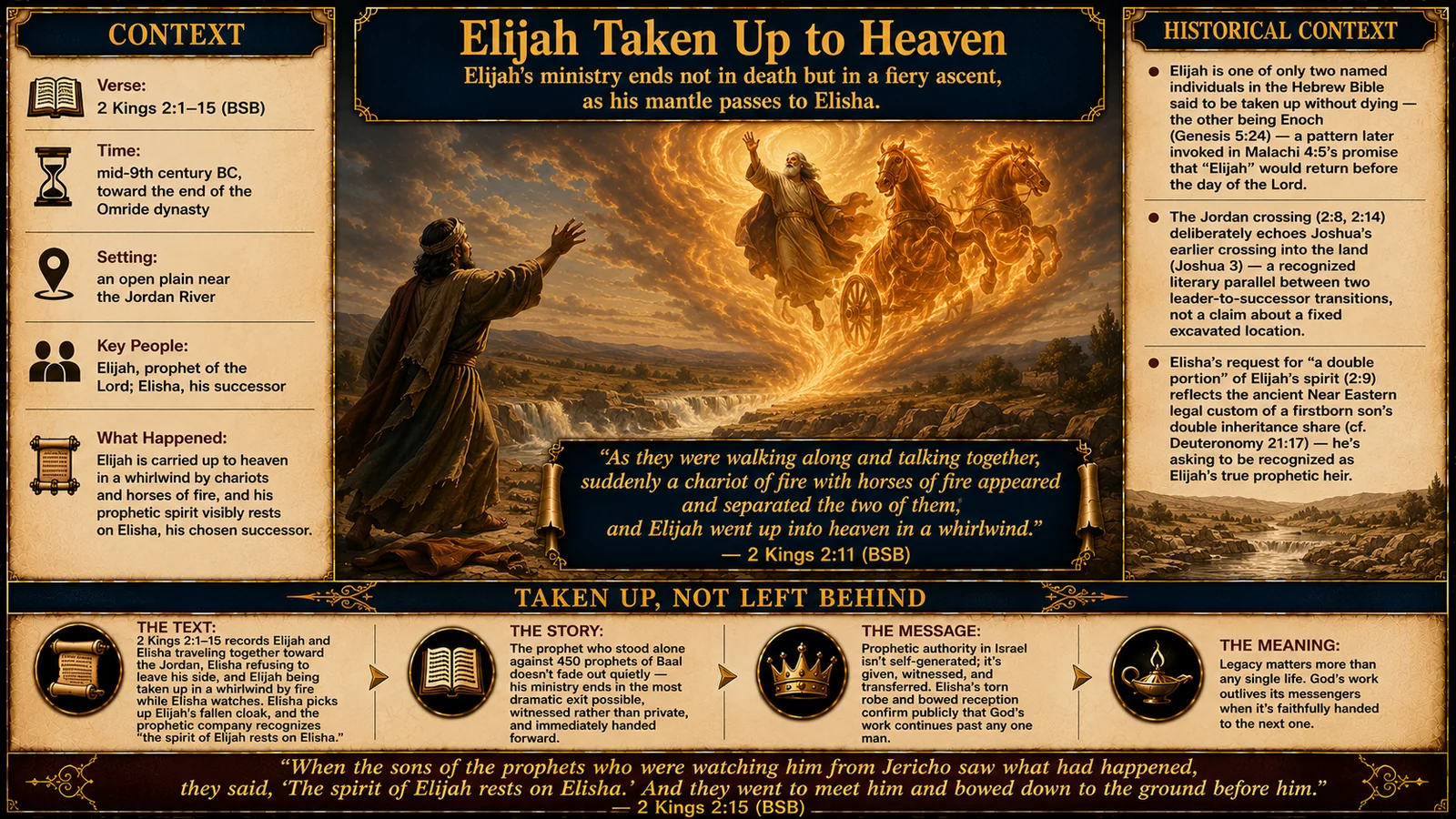
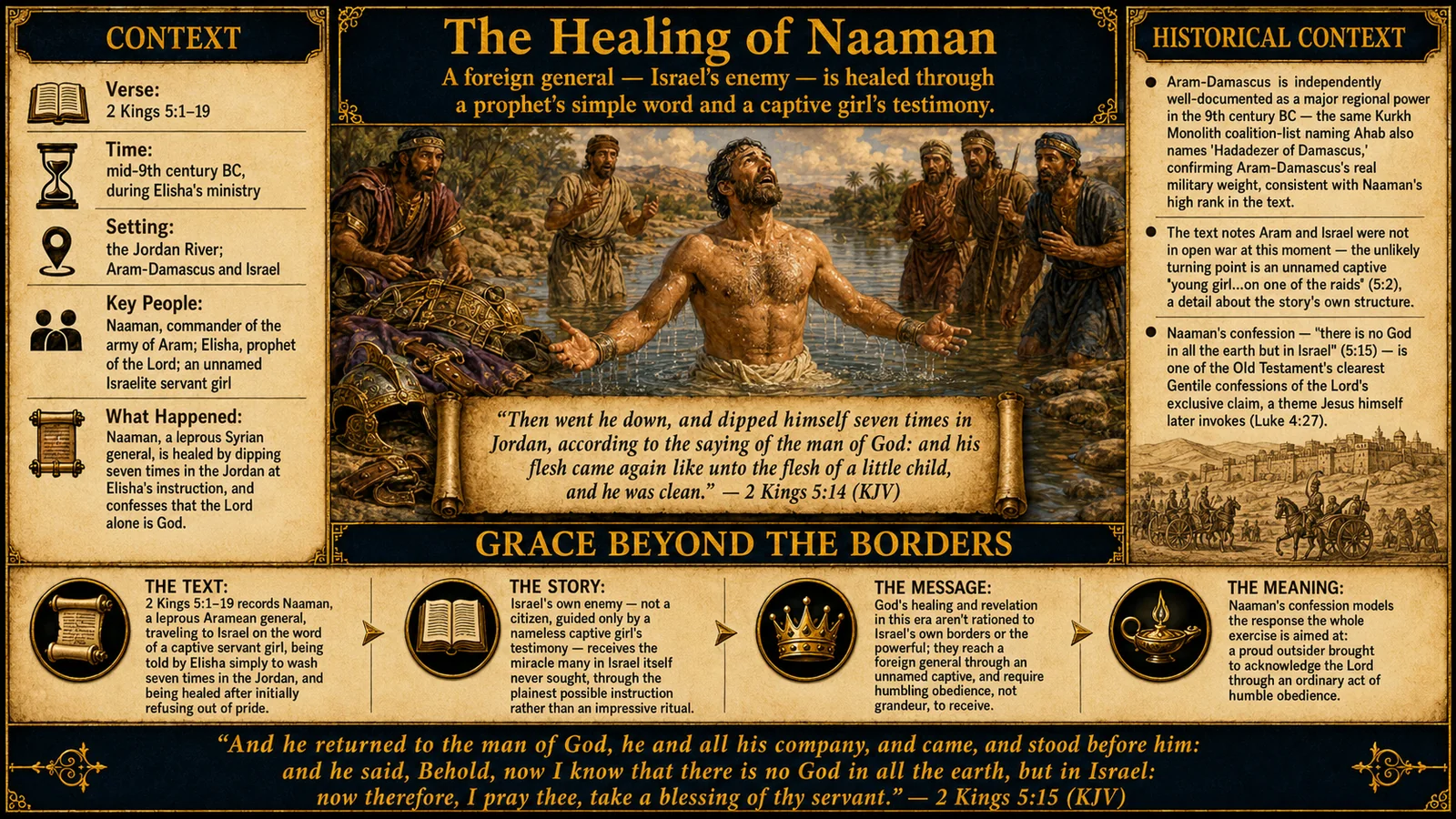
Ten tribes follow Jeroboam, who sets up golden calves at Bethel and Dan. Israel has about nineteen kings in several dynasties, with Samaria as its capital from the time of Omri. Elijah, Elisha, Hosea, and Amos prophesy there, and Assyria ends the kingdom in 722 BC.1 Kgs 12:25–33; 1 Kgs 16:23–24; 2 Kgs 17:1–23
- Outside evidence
Shalmaneser III’s inscriptions name Ahab at Qarqar (853 BC) and show Jehu’s tribute on the Black Obelisk. The Mesha Stele names Omri. Sargon II’s records count tens of thousands deported from Samaria.Kurkh Monolith; Black Obelisk; Mesha Stele; Sargon II inscriptions
- Debated
The idea of ten “lost” tribes is not found in the Bible. Many northerners were deported, while others stayed or moved south, and scholars debate how the later Samaritans relate to them.2 Kgs 17:24–41
- Christian conclusion
Christians read the northern kingdom’s fall as the warning the prophets had given about covenant unfaithfulness.2 Kgs 17:7–18
Israel and Judah at a glance
Israel, in the north, was larger, with no lasting dynasty, a capital at Samaria, and rival worship centers at Bethel and Dan. It fell in 722 BC.
Judah, in the south, was smaller, always ruled by David’s family, with its capital and the temple in Jerusalem. It lasted until 586 BC.